

There are several layers of woven bags. A laminated version are made in two main parts: woven fabric and plastic film. Cloth holds weight. The film increases printing volume, keeps the powder inside and helps retain moisture.
Buying a a laminated PP woven bag therefore means deciding whether the film is useful for your product. The film improves appearance and protection. But it can also change how bags are handled, how much air passes through them and how they are recycled or disposed of.
This paper introduces how the bags are made, what each layer does, which products require additional processes, and how to select the right structure for reliable performance.
A A laminated PP woven bag is a polypropylene woven sack with a thin film layer on one or both sides. The woven part is made of sliced polypropylene tape. The ribbons are woven into fabric to make the bag stronger. The laminate is usually a BOPP film. It is added to an extruded polymer tie layer, usually designed for printing.
Layered printing is better than printing directly on woven fabrics. It also closes the gap between the tape, so fine powder is less likely to leak. It slows the flow of moisture vapor through the bag. It also prevents wear and tear during printing.
But laminating also increases costs and production steps. It reduces breathability and makes the surface smoother, so stacked bags can slide more easily. It can also make recycling more difficult than an unlaminated woven sack. .
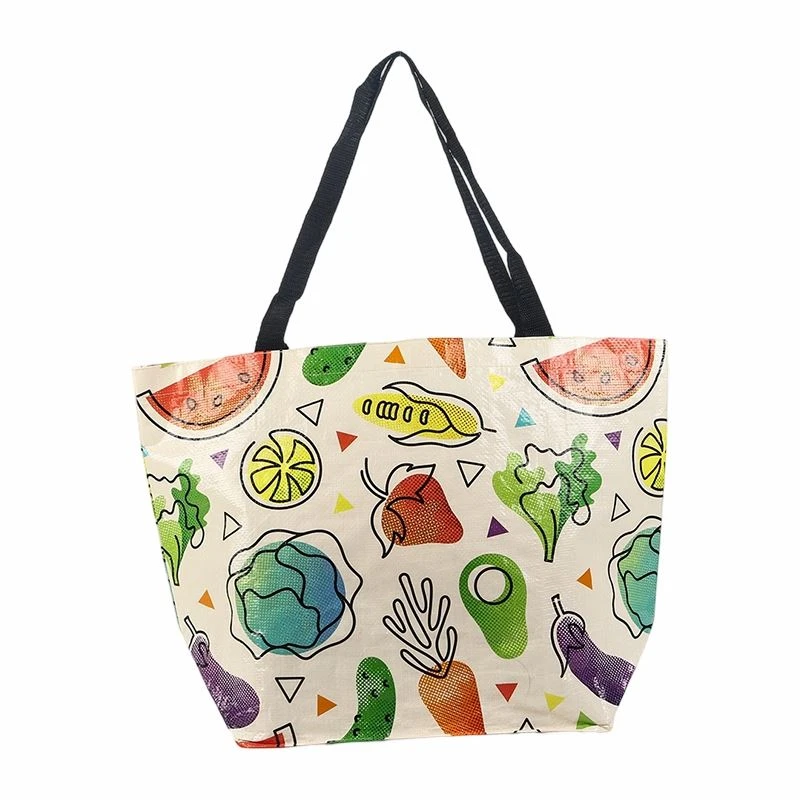
The two halves of the structure
Polypropylene weave starts with a film. The film is cut into a narrow band. The tape is elongated, causing polymer molecules to line up along their length. Then weave the fabric on a circular or flat loom. This alignment makes the material tense. The tape carries the load along the length and the fabric disperses the load onto the fabric. The weight of the fabric, the width of the tape and the thread density of the tape all affect the carrying capacity of the bag.
Weaving is weak. Tapes intersected and intersected, so there were still small passages at the crossing points. In an unlaminated sack, these channels allow fine powder to escape, allowing water vapor to pass through. This is not a production defect. It's part of the knitting structure. This is why unlaminated sacks are usually used for coarse products, while laminated or lined sacks are used for fine products.
A continuous film is layered over a woven fabric. In ordinary commercial bags, the film is biaxially oriented polypropylene (BOPP). It is printed on a gravure plate and then bonded to the fabric with a thin layer of extruded polymer. The film provides a barrier, a printed surface, and a smooth surface. Cloth holds weight. Together, these two layers provide functions that neither layer can provide on its own.
How the film gets attached
There are two main methods to make a laminated bags. They give these bags different properties.
Extrusion lamination is the most common method. A thin layer of molten polymer, usually polyethylene or polypropylene binding resin, is placed between the fabric and the film. Both layers pass through the nip roller. Melted polymer works as binders. The pressure from the roller pushes it into the woven fabric. This creates a strong bond between the layers. The laminate is then cooled and wound for printing or further processing.
Adhesive lamination uses coated adhesives rather than molten polymer layer. It works at lower temperatures. This makes it suitable for extrusion lamination that may not handle high temperatures. But it also increases the process of solvent handling and curing time.
Both require good surface energy. Polypropylene surface energy is low, not easy to bond. As a result, fabric and film are usually treated with corona before bonding. Corona treatment improves surface energy and helps layers bond. If the processing effect is not in the scope of requirements, after the factory can be used alone, the effect is very good. That's why bond strength should be measured by peel test, not only by appearance.
Printing adds a lot of commercial value to the laminated structure. Printing method and order are important. In reverse printing, ink is placed on the inside of the film. The film layer is then pressed on to the fabric so that the ink stays between the film and fabric. This protects the print from scratches, pallet handling, conveyor belt contact, and fade.
Direct flexographic printing applies ink directly to the fabric. The uneven surface of the fabric limits fine detail and intense color. The difference between direct printing and reverse printing can be clearly seen when they are placed side by side. .
What lamination changes in performance
The benefits are clear and measurable. The costs are real, also.
Printing and branding. Antiprint film supports a variety of colors and fine print details. Fingerprints are also protected during removal. For branded retail products, this advantage is enough to justify the mask.
dust-proof. Layers can close gaps in the fabric and prevent fine powder from escaping. For cement, fertilizer, flour, starch and fine chemicals, it's not just a appearance issue. Powder loss leads to product waste and cross-contamination. It can also cause cleaning and dust exposure problems in filling line and warehouses.
2. Water control. The film slows the flow of steam through the bag. This is important for absorbent products. These products can become lumpy, lose flow or become damaged when they absorb moisture. If more protection is needed, a laminated bag with lining are often used.
Abrasion and surface protection. The laminated surface has good abrasion resistance and can reduce the hairiness and tear caused by laminated surface. It also smooths surface of the conveyor.
The trade-offs are also important and are usually only noticed when an order is placed.
Cost. Layering adds film, binds resin, another production step, and prints on different surfaces. Only better printing, dust control and moisture protection, reducing product loss, can compensate for the additional costs.
Less breathability. An airtight film holds moisture and steam in the bag. Condensation, caking or bag deformation can occur in products that release moisture, are filled when heated, or require air to be released when filled. Some bags use micro-perforated film or leave parts of the surface unlayered to allow more air to pass through.
There is less surface friction. Laminated bags are smoother and easier to slide than rough woven bags. This can affect stack stability, especially when 50kg bags are stacked on trays. Pallet patterns, stretch wrapping, or controlled friction factors can help solve this problem.
Fate. A laminated sack may contain a variety of materials such as PP fabric, PP film and tie layer. A mono-material polypropylene bag are easier to use in some mechanical recycling systems. Using a polymer type is one of the main ways to improve recyclability. Claims of recyclability or recyclability need to be supported. In the European Union, these claims are also subject to relevant packaging and packaging waste rules.
Typical construction parameters
|
Parameter |
Common range |
What it controls |
|
Fabric weight |
Roughly 65–120 g/m² depending on product |
Tensile strength, load capacity, stiffness |
|
Tape linear density |
Typically 500–1,200 denier |
Individual tape strength; heavier tapes for cement and minerals |
|
Weave |
Circular or flat loom, plain weave, sometimes with reinforced warp |
Load distribution and seam behaviour |
|
Film thickness |
Commonly 15–30 µm BOPP, 12–30 µm printed |
Barrier, print detail, stiffness, scuff resistance |
|
Tie layer |
About 15–30 g/m² extruded PE or PP-based resin |
Bond strength and delamination resistance |
|
|
Reverse rotogravure, typically up to 8–9 colours |
Brand presentation; trapped ink resists abrasion |
|
Closure |
Stitched bottom with or without crepe tape; pasted block bottom with valve |
Filling method, leak tightness, automation compatibility |
|
Dimensions and fill weight |
25 kg and 50 kg are the classic formats, with 10–25 kg for retail |
Load case, drop height, pallet pattern |
Where a laminated sack is the right answer
Layering is useful when the product is subtle, water-sensitive, or marketed according to appearance.
Stacked bags and valve bags are often used in cement and dry mortar during high-speed filling to help control dust. Fertilizers and chemicals need to be moisture protection and well printed. They may also need hazard labels and must be kept clean during handling.
Resin granules and polymers require clean filling and moisture control. Their bags are also often printed with detailed product and grade information.
Sugar, flour, starch and powdered food ingredients require consistency in food exposure and barrier protection. This means that films, resins and inks must all meet the requirements of food exposure rules.
Seeds and treated seeds are another exception. Dust control helps protect product quality and makes handling safer.
Plastic bags can also be used for animal feed and pet food. The film helps prevent fat and powder from staining or leaking from the outer pocket.
Where it is not
Some products do not benefit enough from lamination to justify the additional costs. A good supplier should also specify when it is better to use a mezzanine bag.
Rough products that don't absorb too much moisture and don't require branding can often be used in an unlaminated sack. For example, construction aggregates, some mineral fillers, sand and bulk materials sold only to industrial buyers in accordance with product specifications. Hemp sacks without a mezzanine are better to breathe and often cheaper.
Products that need to release moisture are a different story. Hot fillings, wet produce, and powder that releases steam during filling can put pressure on the bag or cause the film to condense. In this case, An unlaminated sack, a perforated film or other types of packaging may be preferable.
Filling equipment is also important. Some machines grab and open woven fabric directly. A laminated sack has a smooth surface and different stiffness. This may require new machine settings and sometimes hardware changes. These additional costs should be included in the project budget prior to installation.
Verifying what you bought
Specification accuracy depends on testing the properties that actually govern performance in service, which is why an order for a laminated PP woven bag should come with test data rather than a description.
|
Property |
Why it matters |
Test basis |
|
Fabric tensile strength |
Load capacity and handling damage resistance |
ISO 13934-1 strip method, or ASTM D5034 grab method |
|
Bond strength between film and fabric |
Delamination in use, especially after pallet abrasion |
ISO 11339 T-peel test for flexible bonded assemblies |
|
Film impact and tear resistance |
Puncture and tear propagation in handling |
ISO 7765 and ASTM D1709 for impact; ISO 6383 for tear |
|
Water vapour transmission rate |
Barrier performance for hygroscopic contents |
ISO 15106 or ASTM F1249 |
|
Drop performance of the filled sack |
Real-world handling and distribution shock |
ISO 2248 vertical impact drop test, within a schedule such as ISO 4180 |
|
Stacking stability |
Warehouse stacking over time |
ISO 2234 static loading of complete filled packages |
|
Print adhesion and rub resistance |
Legibility of branding, grade, and hazard information |
Print-specific rub and adhesion methods agreed with the supplier |
As well as physical testing, two compliance areas need to be checked. Material that comes into contact with food must comply with plastic contact rules. These rules apply to films, resins and inks. food safety management systems also help to provide the records and traceability required by auditors.
If woven fabrics contain mineral fillers or films contain stabilizers, their transport and material content must also be checked in accordance with the same food exposure rules. A mere glance at the bag could not confirm this.
FAQ
Are a laminated PP woven bag waterproof?
It's waterproof, not completely waterproof. The film keeps liquid water and slows water vapor far more than nude fabrics. But the film is thin, and the knitting bag still has a suture seal. During the sewing process, small holes are created into which water can enter. In very humid conditions, a liner with a seal or valve closure is required. It's not enough to just add more layers.
How much for a patch and bag?
Additional costs come from films, binding resins, additional production steps, and printing on film rather than fabric. Costs also vary depending on the thickness of the film, number of colors printed and the size of the order.
A better comparison is the unit cost of delivering the product, not just the cost per package. Additional costs can be recouped by reducing dust loss, moisture damage and better product appearance. Additional costs may not provide sufficient value for unbranded, shoddy products.
Can laminated woven bags be recycled?
The main problem is that bags may contain different materials such as polypropylene fibres, polypropylene films and tie layer. These materials are difficult to separate after use.
One way to improve recycling is to use a polymer type when the product does not require a more complex barrier. Printing and coating materials should also be used in planned recycling system. Recycled-content and recyclability should be required only if there is evidence to support the content and recyclability in accordance with relevant rules.
Sources
ISO 23560 - woven polypropylene sacks for the packaging of foodstuffs
EN 277 - sacks for the transport of food aid made of woven polypropylene fabric
ISO 13934-1 - textiles, tensile properties of fabrics, determination of maximum force and elongation at maximum force using the strip method
ASTM D5034 - breaking strength and elongation of textile fabrics, grab test method
ISO 11339 - adhesives, T-peel test for flexible-to-flexible bonded assemblies
ISO 6383-1 and ISO 6383-2 - plastics, film and sheeting, determination of tear resistance
ISO 7765-1 and ASTM D1709 - determination of impact resistance of plastic film by the free-falling dart method
ISO 15106 and ASTM F1249 - determination of water vapour transmission rate of plastic film and sheeting
ISO 2248 - packaging, complete filled transport packages, vertical impact test by dropping
ISO 4180 - packaging, complete filled transport packages, general rules for the compilation of performance test schedules
ISO 2234 - packaging, complete filled transport packages, stacking tests using static load
EU Regulation on packaging and packaging waste, including recycled content and recyclability requirements
ISO 14021 - environmental labels and declarations, self-declared environmental claims
EU 10/2011 and FDA 21 CFR Part 177 - plastic materials and articles intended to come into contact with food
ISO 22000 - food safety management systems
ISO 9001 - quality management systems


