

Trillion-dollar temptation
In 2026, the greatest consensus in the field of embodied intelligence can probably be summed up in four words - a trillion-yuan market.
At the World Robot Conference (WRC), more than one exhibitor cited this figure to depict the bright future of the industry.
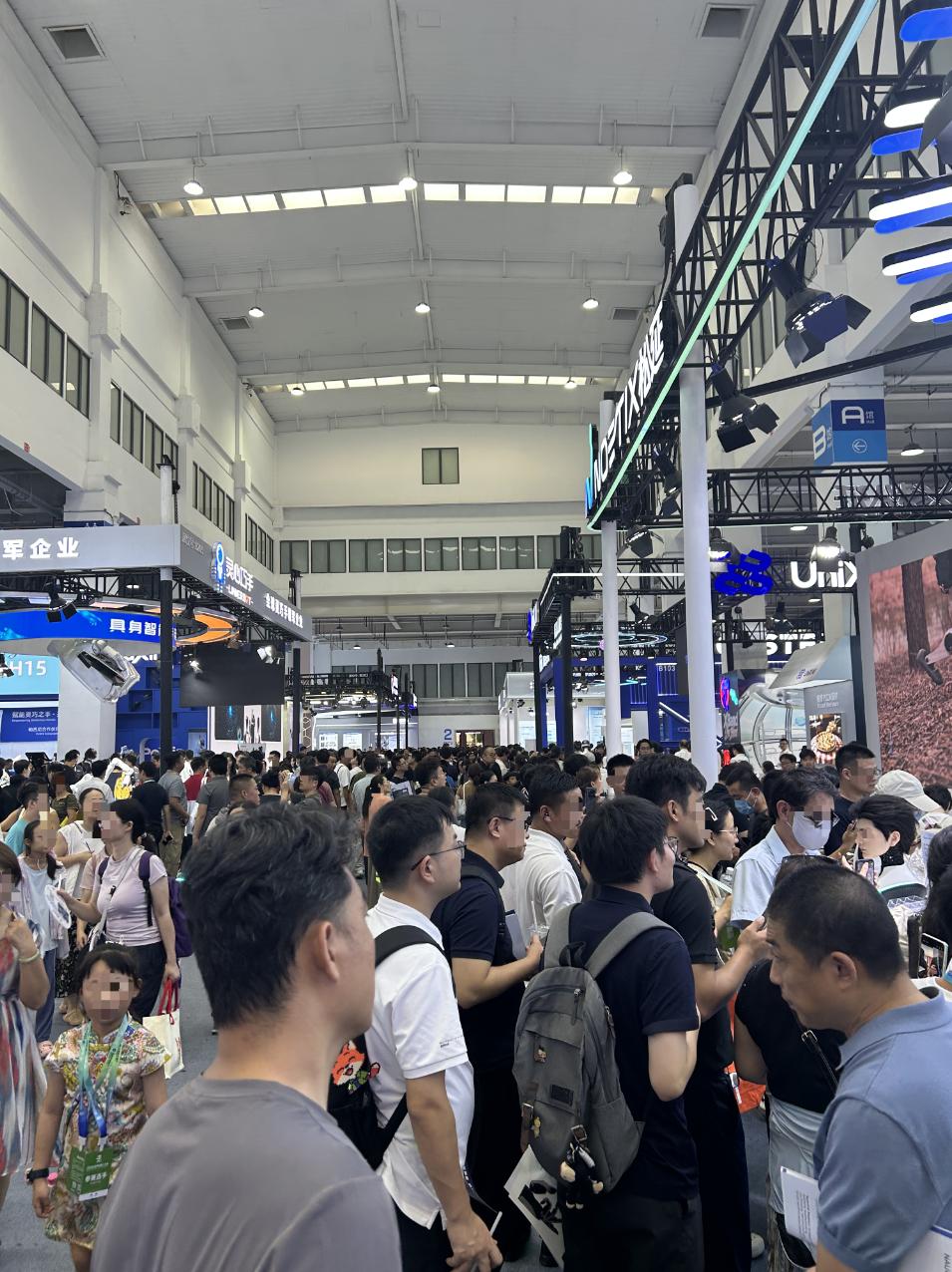
It's hard to say whether the market demand can really reach a "trillion" volume, but the total valuation of embodied intelligent-related enterprises is getting closer and closer to one trillion.
According to incomplete statistics, as of August 21st, there are at least six companies with a valuation of over 20 billion yuan, including Galaxy General, Xinghaitu, Zivariable, Zhipingfang, Jijie Vision, and Lingxin Qiaoshou. There are at least ten companies with a valuation of over 10 billion yuan, including Zhongqing Robotics, Zhuji Power, Qianxun Intelligence, and Xingdong Jiyuan. In addition, there are Yutree Technology with a market value of 270 billion yuan, UBTECH with a market value of 42 billion yuan, as well as Leju, Yunshendu, and Zhiyuan that are queuing for listing. The total valuation of the top players easily exceeds 600 billion yuan.
Can't catch it
The newly released humanoid robot "Superman" by Utsu has surpassed the human limit in running speed. However, Wang Xingxing emphasized during his speech at WRC that robots cannot be used on a large scale to work in factories for the time being, and their efficiency and generalization ability are still not high enough.
This is like a realistic metaphor for the embodied intelligence industry: "Embodied" runs too fast, while "intelligence" fails to keep up.
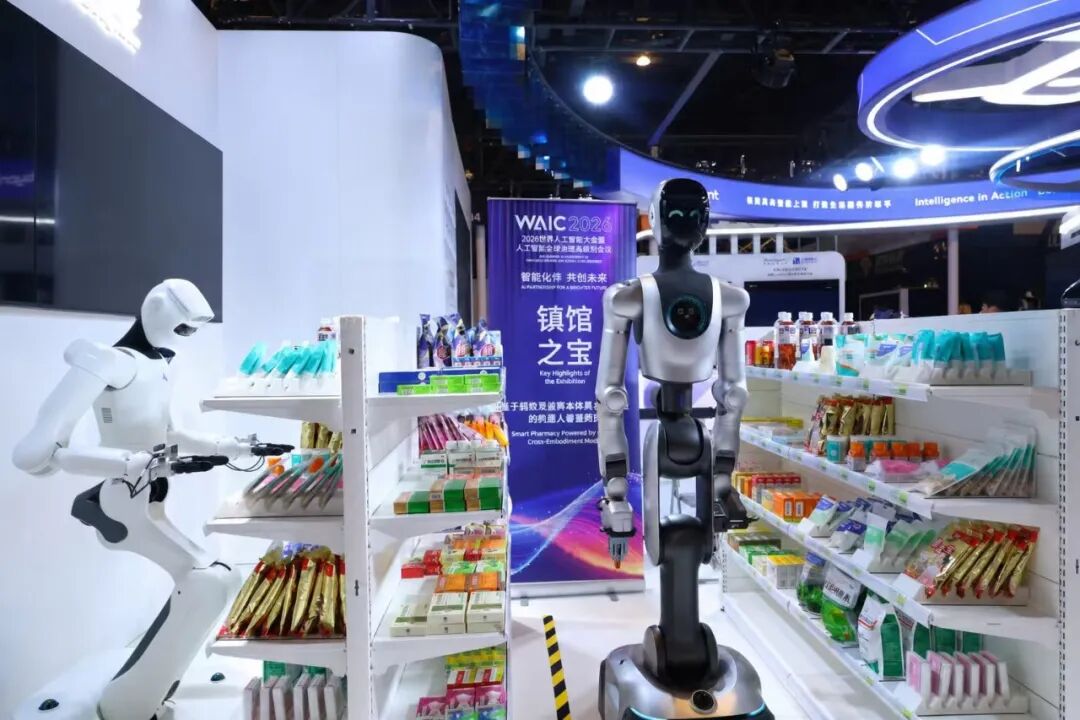
In the productivity scenario, the robots at the WRC booth have highly similar job responsibilities: factory material loading, palletizing and depalletizing, and logistics sorting.
It is hard to say whether this is an important breakthrough in the implementation of embodied intelligence or a ready-made fruit of industrial automation that has lasted for many years.
In our view, the difference between "embodied" and robotic arms ultimately depends on whether they are "intelligent" or not. Otherwise, the awkward reality of robots entering factories being "returned" that emerged in 2025 May be repeated.
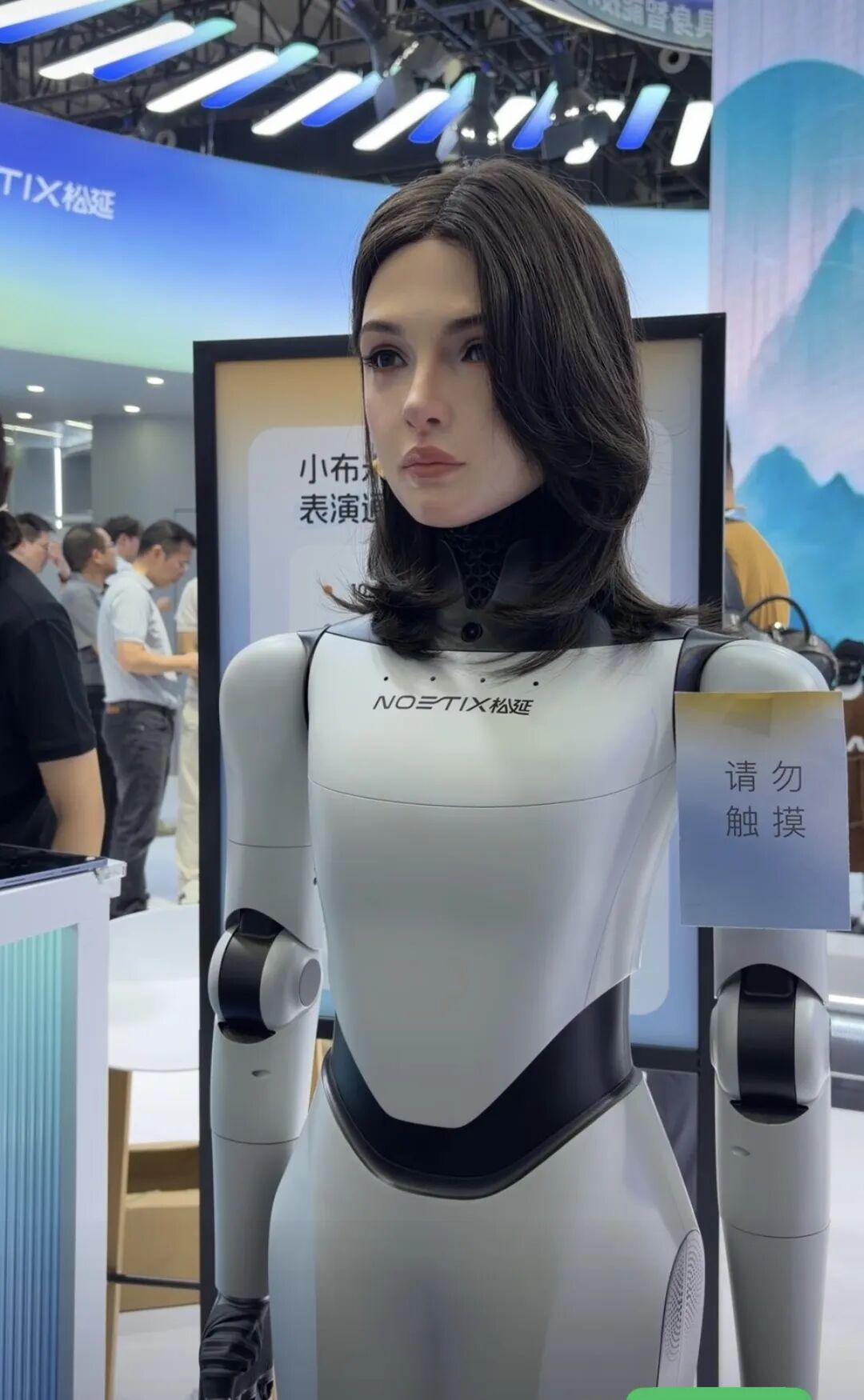
A software engineer at a machine tool manufacturing plant told Noise Reduction NoNoise that they are also assessing the possibility of robots entering the factory. Previously, I communicated with an agent of a leading embodied enterprise. The entire set of configuration, including data collection and training, software development, platform, and robot body, costs as high as two to three million yuan.
One reason for the high cost is that for new tasks, the robot model needs to be retrained each time.
But as far as he knows, the output of robots is negligible. "It's just a concept now. If you ask it to actually work in a factory, its efficiency is still far behind that of human labor."
The focus of industries is beginning to shift
How long it will take for embodied intelligence to enter factories on a large scale and do housework at home depends on the evolution speed of the embodied "brain" and breakthroughs in the collection and translation of physical AI data.
From this perspective, the embodied intelligence industry is still in its early stages.
Some robot products from embodied intelligence companies are flowing to data collection centers led by local governments. The embodied intelligence company then purchases the data collected by the entity from these data collection centers.
This is somewhat suspected of being a "circular transaction" in the business model. Previously, Nvidia's model of investing in AI companies with one hand and selling chips to them with the other and then taking out the money made Wall Street uneasy, constantly Shouting about being vigilant against an AI bubble.
In the embodied intelligence industry, how many bubbles there are, sales volume and actual usage are also interesting observation Windows.
Zhu Kai, the general manager of the Beijing Shijingshan Humanoid Robot Data Training Center, also provided a set of domestic market data in a previous interview: In the first half of this year, 23,000 humanoid robots were shipped in China, but the proportion of those that actually entered factory production lines and stably undertook actual work was less than 5%.
At present, there is still a long way to go for robots to be implemented. In the early stage of the industry, news like a certain car manufacturer purchasing 100 units of a certain robot is no longer sufficient to serve as evidence of the commercialization success of the embodied enterprise.
The true commercialization indicator should be the repurchase rate of customers. Repeat purchases verify efficiency and cost.
When a customer expands the deployment to 500 units the following year after purchasing 100 units, it might indicate that the business model has begun to take shape.


